Guide
Corporate Escape Game: Guide and Best Practices for Successful Team Building

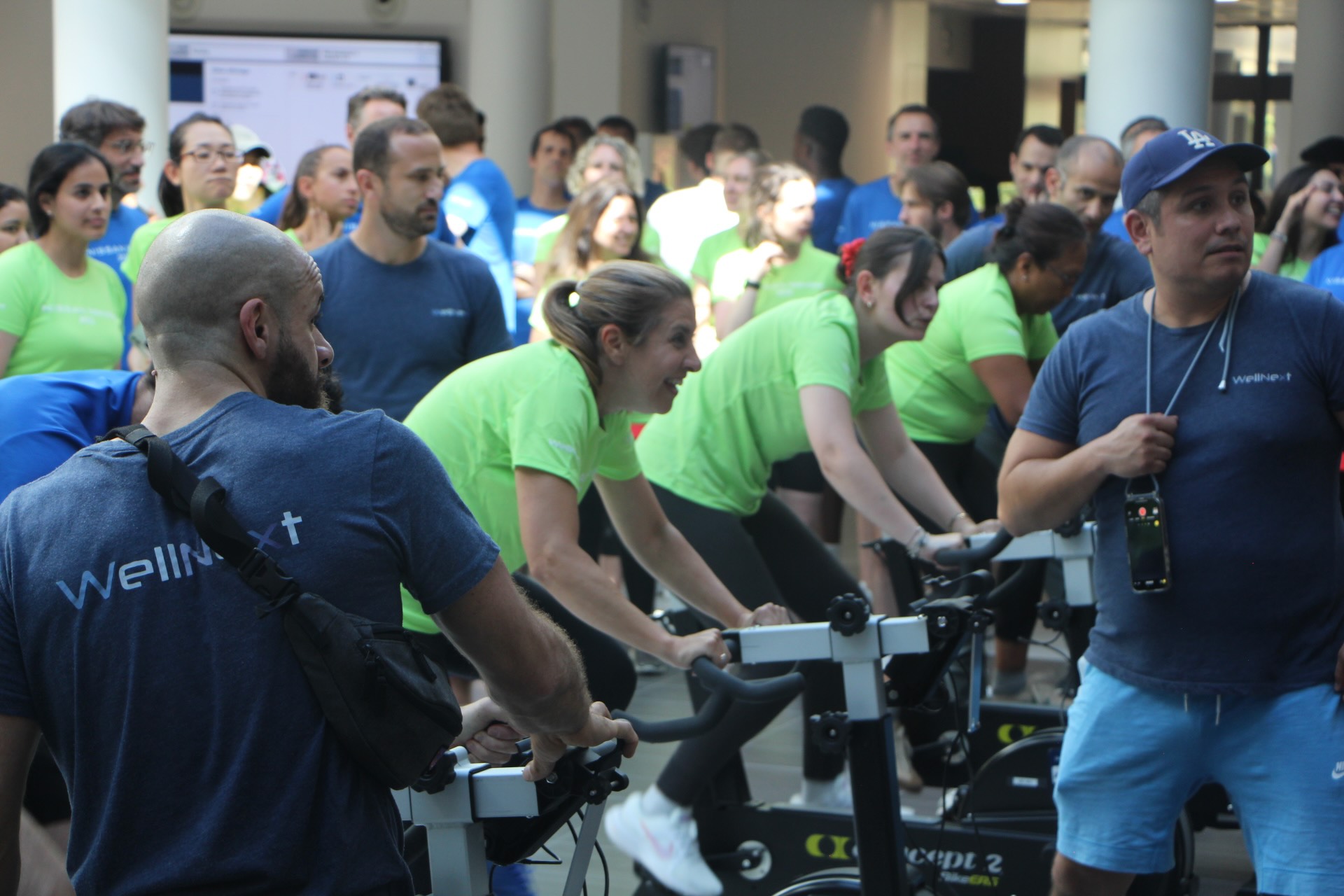
Team Building is a practice that reinforces cohesion and solidarity between team members. Thanks to activities shared outside the usual work environment, employees can get to know each other better, work together more effectively, develop a sense of belonging to their company and, more concretely, allow participants to let off steam and enjoy a day out of the office together. It also helps to calm future conflicts, ease the integration of new arrivals and boost motivation. Team Building can also improve collective performance, encourage creativity and convey a modern, close-knit corporate image.
Team Building enables participants to break out of traditional frameworks, explore new ideas and develop problem-solving skills, thus fostering a lasting culture of innovation within the company. Team Building can also be a competitive factor, with adapted games (e.g. challenges, multi-team games, time trials, etc.) to boost productivity back at the office.
To prepare a Team Building activity, it's essential to follow several key steps. First, clearly define the objectives of the event, so as to choose activities that are adapted to team cohesion, communication or motivation. Next, find out the needs and expectations of participants, notably through surveys, to select activities that appeal to everyone. You also need to set a budget, and choose the venue and date. Drawing up a precise program for the day, with a clear agenda to communicate to participants, is also essential. Finally, to evaluate the success and impact of the day: it's important to gather feedback after the event (whether in person or via social networks/Google reviews), as this will enable you to assess its success and impact, and better organize future Team Building events.
The CSE (Social and Economic Committee) is essential to the functioning of a company. Its mission is to oversee the company's social climate and the health of internal relations. This means building a constructive social dialogue between management and employee representatives, ensuring improved working conditions for all, and resolving and anticipating potential conflicts.
In this sense, organizing a Team Building through the CSE perfectly meets these objectives. The collective dynamic during a Team Building is beneficial for everyone and allows for smoother and more natural exchanges at work. Organizing a CSE Team Building event is therefore a strategic investment for the health and performance of the company and is perfectly suited to the CSE's objectives.
Team Building aligned with corporate values means transforming the principles of corporate culture into experiences for teams, through activities that embody these values and generate commitment.
Team Building activities need to be tailored to these values. To raise awareness of diversity, for example, role-playing games can highlight actions that promote mutual support and respect for differences.
To raise awareness of sustainable development issues, playful activities such as escape-games in the forest, a Climate Fresco (to reflect on the consequences of climate disruption), eco-responsible treasure hunts... numerous options are available to connect your employees with the notion of preserving the environment.
In the same way, you can theme your activities around several different values: integrity, leadership, open-mindedness and others...
Organizing a Team Building event in line with corporate values transforms abstract principles into concrete behaviors, and helps build a solid, shared corporate culture.
L’microphone animator is a central and indispensable player in a Team Building day. His dynamic, professional presence ensures the coherence and fluidity of the event, captures participants' attention and creates a friendly, motivating atmosphere. Thanks to his ability to engage the audience, boost collective energy and manage transitions, he encourages the active participation of everyone, reinforces the sense of belonging and makes for a memorable experience for the whole group. The microphone animator also knows how to adapt in real time to unforeseen events, anticipate the group's needs and encourage exchanges. A good microphone presenter will involve all employees in a successful Team Building event.
Discover our solutions to organize your next corporate team-building event. On the program: activities, customized games, participation and good humor.
Again, this will depend on your needs and resources. The budget for a Team Building event can range from €50 to over €200 per person, depending on the type of activity chosen, the venue, the number of participants and the duration of the event. Generally speaking, it's best to prioritize the quality of the experience to make sure you get the maximum benefit from Team Building for your company.
To optimize your budget, you can opt for outdoor activities in open-access locations (e.g. picnics in a park or treasure hunts in a big city) and take advantage of the package deals offered by most event organizers. If money isn't an issue for you, and you'd rather make sure you offer your staff an unforgettable souvenir, you can opt for higher-budget activities such as immersive events (e.g. escape-game, theme park...), privatize a venue or offer all-inclusive accommodation packages.
It's perfectly possible to make a good Team Building even on a small budget. The important thing is to target your priorities and keep a starting price in mind.
Company seminar and Team Building: two complementary terms that are often found together, but which are in fact two very different types of business event with very different objectives and formats. A few definitions are in order:
First: a seminar is an event that focuses on work, training, information sharing and strategy. It brings together almost all employees around specific themes. (such as announcing results, presenting future objectives, training in one or more new skills, etc.). Seminars often include work sessions, conferences and professional workshops.
Secondly: the Team Building is exclusively concerned with strengthening group cohesion through playful, creative or sporting activities. Its aim is to build trust, improve internal communication, encourage collaboration and create a positive climate between colleagues. Unlike seminars, Team Building activities focus on conviviality, mutual support and interactivity, without necessarily being linked to the company's activities or objectives.
In simple terms, a seminar serves a professional purpose (corporate strategy, information, training, etc.), while Team Building focuses on employee well-being and strengthening bonds.
There are no fixed rules as to the minimum or maximum frequency of Team Building events: this will depend above all on your company's needs, size and culture. Nevertheless, management experts advise you to organize your Team Building events on a regular basis. You can't expect to achieve good results with just one Team Building event. Group cohesion and motivation are things that have to be cultivated over time, which is why it's so important to create a regular event designed to enhance your employees' well-being. A minimum of twice a year is enough to arouse the expectation and desire of your workers.
Choosing just one activity from all those available for a Team Building event can be complicated. With the democratization of this practice, there's no shortage of choice. Among the most popular Team Building activities are..:
These activities are the most effective because they offer a balance between play, reflection and action, while being accessible to all types of profile. The choice will depend on a number of criteria, such as the objectives of the Team Building (relaxation, creativity or challenge), the number of participants and above all the weather (indoor or outdoor Team Building).
Wasted time, mistrust, irrelevance... Some of your employees may be reluctant to take part in your Team Building activities, and unable to see the full benefits. Team Building is often seen as a useless activity, an obligation rather than a personal pleasure.
To try to change their point of view, you can start by clarifying the objectives and meaning of Team Building. Explain how the activity is useful, both for the company and for individual development, and link Team Building to real work issues. You can also adapt the activity to the group's profile and desires. By proposing varied activities, accessible to all, with preparation that takes into account each person's personalities and abilities. If possible, it's a good idea to encourage voluntary participation, i.e. to leave the choice up to the participants and avoid systematic obligation. Otherwise, you run the risk of antagonizing these people, and running the risk of having them detract from your Team Building day for the rest of the participants.