Speakers
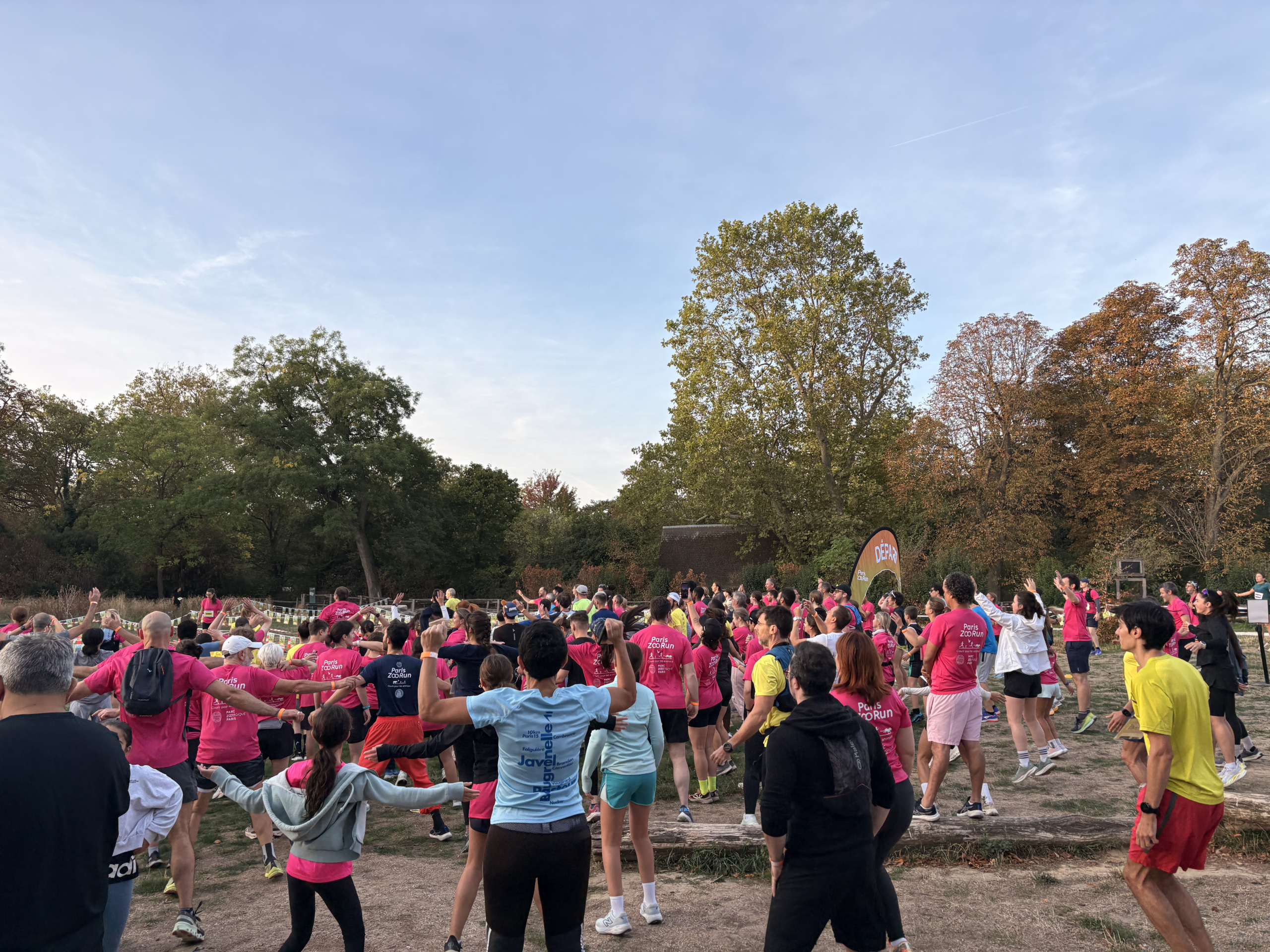
Running Speaker in Paris, our microphone hosting at the Paris Zoo Run

An awards ceremony can very quickly resemble a parade of names and polite applause. Speeches, podium, photo, on to the next. Everyone's happy, and no one remembers much the next day.
The mayor's office of Vitry-sur-Seine.
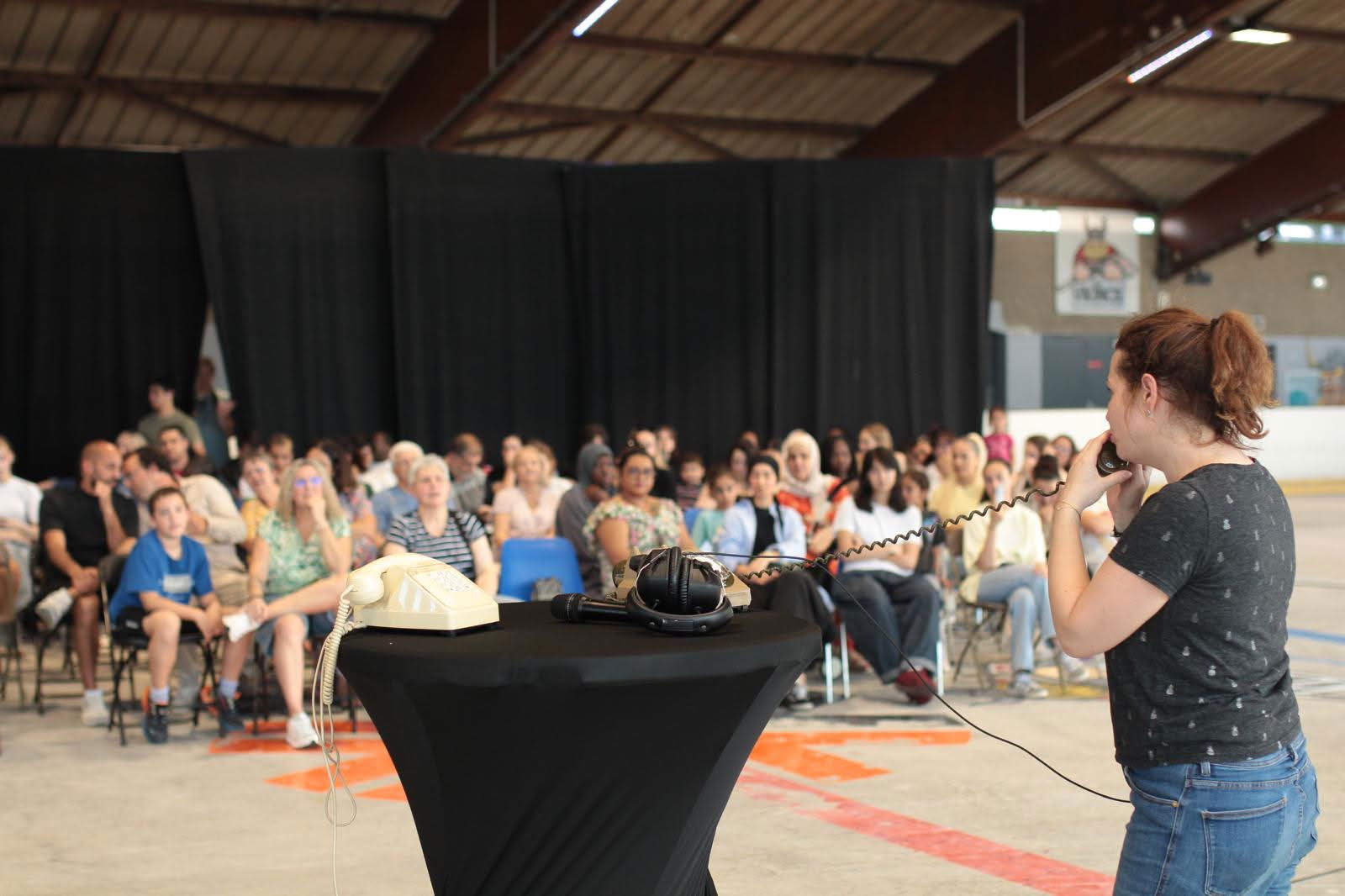
Here's what it looked like on the ground, at the Vitry-sur-Seine ice rink.
In traditional theater, the stage and the auditorium are two separate worlds. Actors perform in their fictional universe while the audience watches from their seats. This invisible boundary between the two spaces is called the fourth wall. It's an unspoken agreement: the actors act as if the audience doesn't exist, and the audience acts as if they only see reality.
Breaking down this wall is rejecting this convention. A comedian addresses someone in the audience directly. They call out to them, integrate them into the story, give them a role. The boundary breaks. It's no longer a show we're watching; it's an adventure we're participating in.
In a room of 200 people waiting for their diploma or trophy, attention spans are short. Phones come out, conversations resume. Participatory theater cuts short all of that.
When the actors move among the crowd, and no one knows who will be called on next, everyone’s attention is completely focused. People watch intently, smile, and hold their breath. And when it’s their turn to be in the spotlight, they experience something personal—something they’ll talk about later.
That's exactly the effect we were looking for for the Vitry-sur-Seine evening.
Any institutional event is better off being held in a venue that resonates with people. A plain municipal hall with folding chairs lined up in rows—it works. But it doesn’t create lasting memories.
Visit Vitry-sur-Seine ice rink, it's different. It's a sports and cultural facility that the residents know, frequent, and associate with good times. For a ceremony honoring local citizens, associations, or athletes, performing in this place sends a strong signal: you are being welcomed into a place that belongs to you.
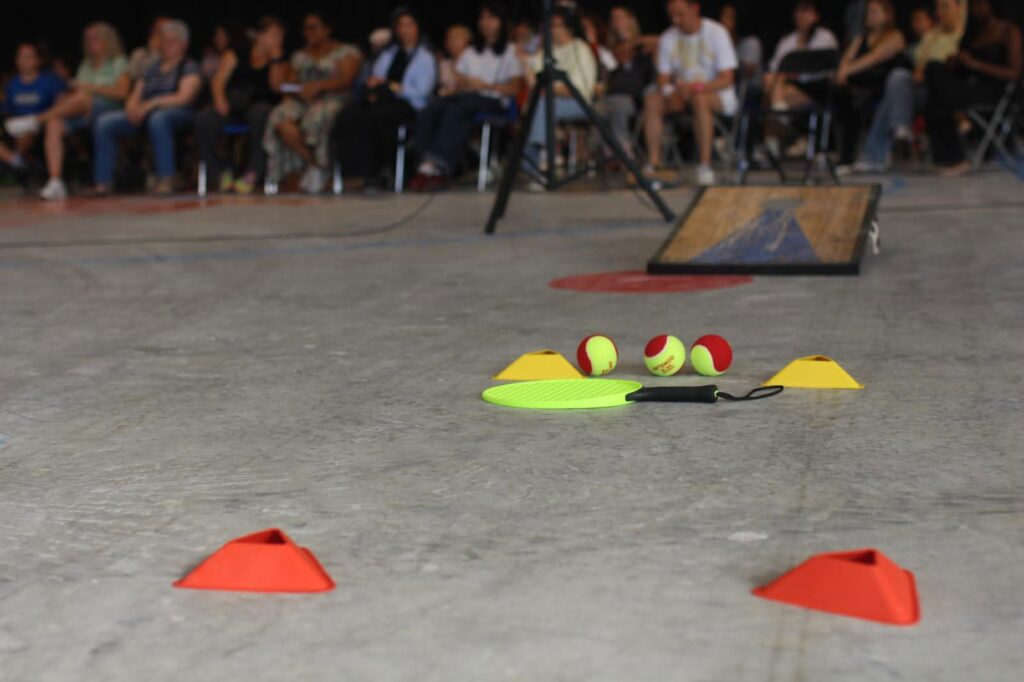
The scene takes place off the ice. The space has been set up to create a temporary performance hall, with the visual depth of the ice rink in the background. The effect is immediately striking.
We arrived in the late morning for the installation. Sound system, stage lighting, definition of playing areas: everything is planned so that the actors can leave the stage and go towards the audience without technical constraints.
Seating arrangements are carefully planned from the outset. We don’t just seat everyone in fixed rows. We create zones, allow for pathways, and anticipate when the actors will move around. This preparation is invisible to the guests, but it sets the stage for everything that follows.
At the Vitry ice rink, many of the award recipients honored that evening had ties to sports and the local community. Receiving their trophies at a city-run sports facility, in a setting that celebrated their commitment, made perfect sense from start to finish. It’s no coincidence that the evening went so well: the venue and the program complemented each other perfectly.
If you're organizing an event in your town, choosing the venue deserves just as much attention as planning the program. A gym, a media center, or a renovated community hall can all make for impressive settings—as long as you use them wisely.
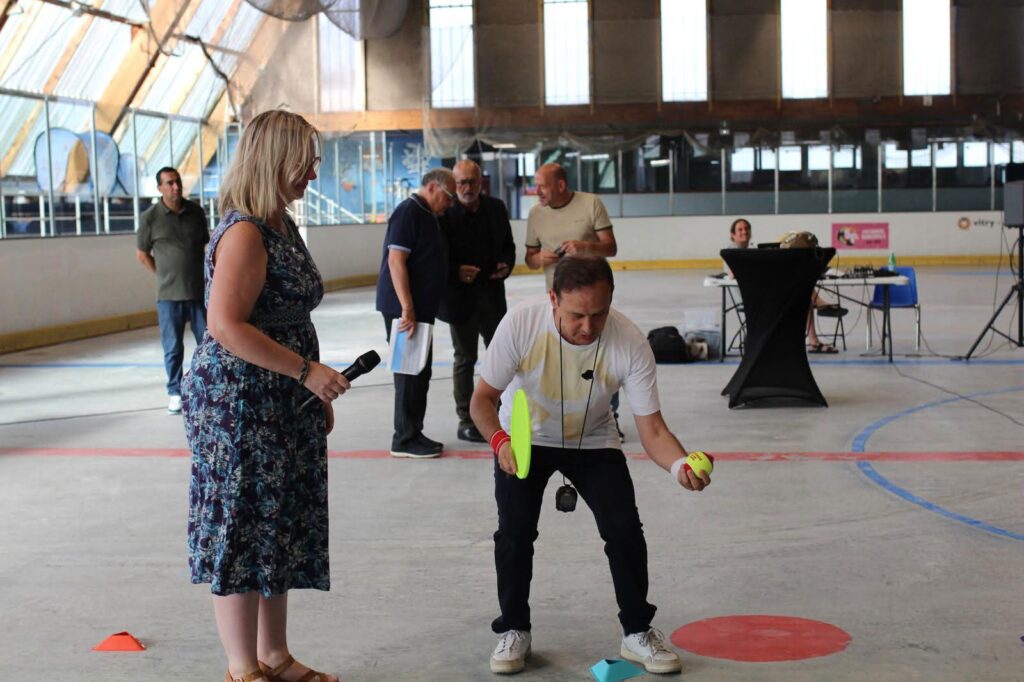
Participatory theater isn't something you can just improvise. Well, actually, you can. But not just any old way.
Our approach: We work with the client for several weeks leading up to the event to develop a framework script. This script outlines the main scenes, the pivotal moments, and the archetypal roles the actors will portray. It also identifies specific elements of the evening that we’ll incorporate: the names of a few award winners, anecdotes about the city, and references to local news.
For Vitry-sur-Seine, we had several discussions with the town hall staff. We gathered information on the award categories, the profiles of the winners, and the desired atmosphere for the evening. These elements became the foundation for the script.
The script provides the structure. Within that framework, the actors improvise. That's when it comes to life.
A comedian who addresses someone in the audience doesn't know what they will say in response. They have to adapt, bounce back, keep the scene going while allowing room for the unexpected answer. It's this gap between the prepared and the spontaneous that produces the funniest, most touching, and most memorable moments.
That evening, several moments took turns no one had anticipated. One award winner made a remark that sent the entire audience into fits of laughter. An elected official went above and beyond what we had hoped for. Moments like these can’t be scripted; they’re created in the moment, right there on the spot.
We could have done: first the show, then the trophies. We chose to mix the two.
The actors set the pace for the awards ceremony. Each elected official’s time at the microphone was scripted, but the transitions between names were dramatized. The audience was no longer simply sitting through a list; they were eagerly awaiting what came next. The winners took the stage in a lively setting, not on a static podium.
It is this continuity between the performance and the ceremony that makes all the difference. We don’t simply «host» the event; we transform it from within.
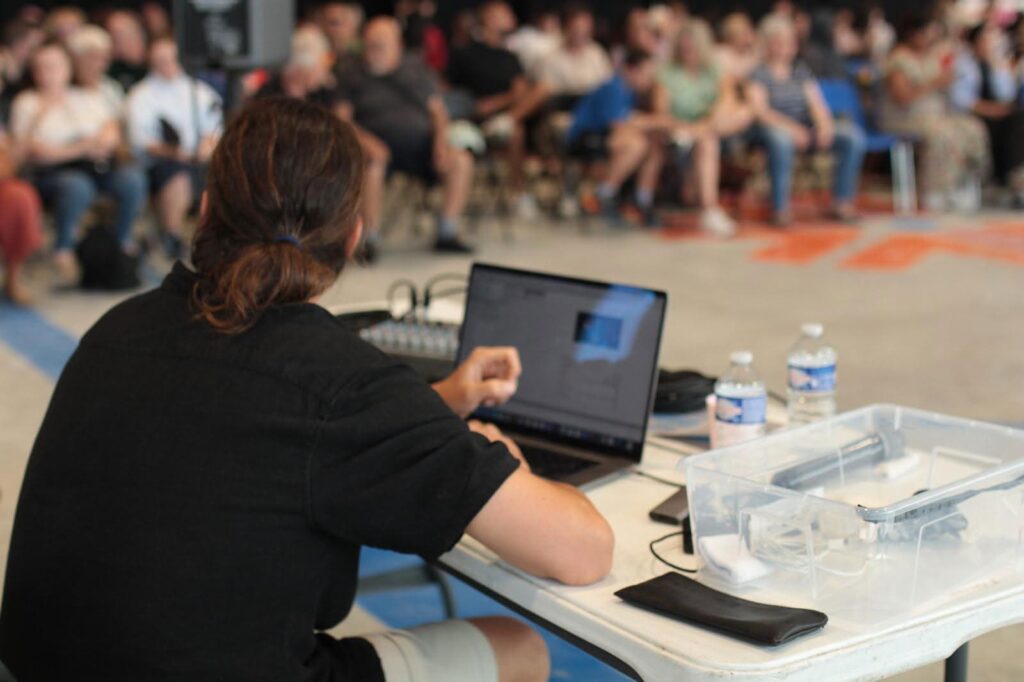
Institutional ceremonies often struggle to create connection. They are necessary, they recognize real people and commitments, but they sometimes lack warmth.
Participatory theater changes that. Guests leave with a story, an image, or a shared moment. They talk about it with their loved ones. They associate the city hall positively with a successful evening.
It's corporate communications, but through experience rather than words.
The same logic applies to other formats:
Each time, the principle is the same: co-create a scenario with elected officials or teams, adapt it to the location and audience, and let trained actors do the rest.
A successful participatory theater production relies on three things: experienced improvisation actors, a well-prepared script, and solid technical coordination.
This is not the type of performance to be improvised with an amateur theater troupe and a last-minute microphone. The quality of the prior preparation is immediately visible in the room. Public Anim works with professional actors trained in improvisation and accustomed to the constraints of institutional events.
Are you organizing a municipal ceremony or event? Visit our page micro-animation or Contact us directly So we can build something together.
The awards ceremony in Vitry-sur-Seine was a success because everyone in the room experienced something, not just witnessed something. That's the difference participatory theater makes.
The ice rink was the right place. The scenario co-created with the town hall was the right tool. And the actors' improvisation did the rest.
If you're looking to break your next corporate event out of the classic format, that's exactly what we do. Tell us about your project.
Yes, provided the scenario is adapted to the context. An award ceremony, New Year's greetings, an inauguration, or an association day can all benefit from a participatory staging. The important thing is to calibrate the level of interaction according to the expected audience and the tone desired by the community.
Not necessarily. The element of surprise is part of the setup. The actors are trained to engage people in a friendly way, without ever putting anyone in a difficult position. Participation always remains light and voluntary.
Generally, allow three to four weeks for the scenario co-creation phase with the town hall teams, plus a technical rehearsal on-site before the event. The more time you have in advance, the more personalized the scenario can be.
For a room of 100 to 300 people, two to three actors are enough to cover the space and create real momentum. Beyond that, you can consider expanding the troupe depending on the venue's setup.
That's precisely where it's most effective. We integrate official moments into the fabric of the show, instead of separating them. The speeches remain, the award presentations remain, but they are carried by staging that holds attention.
Yes. Public Anim operates throughout Île-de-France and France. For example, we have hosted events in Val-d'Oise, Yvelines, and Paris. Consult our article on Team building activities in Val-d’Oise to see other examples of our presence in the region.