Culture
Brussels, a top European capital for team building activities.

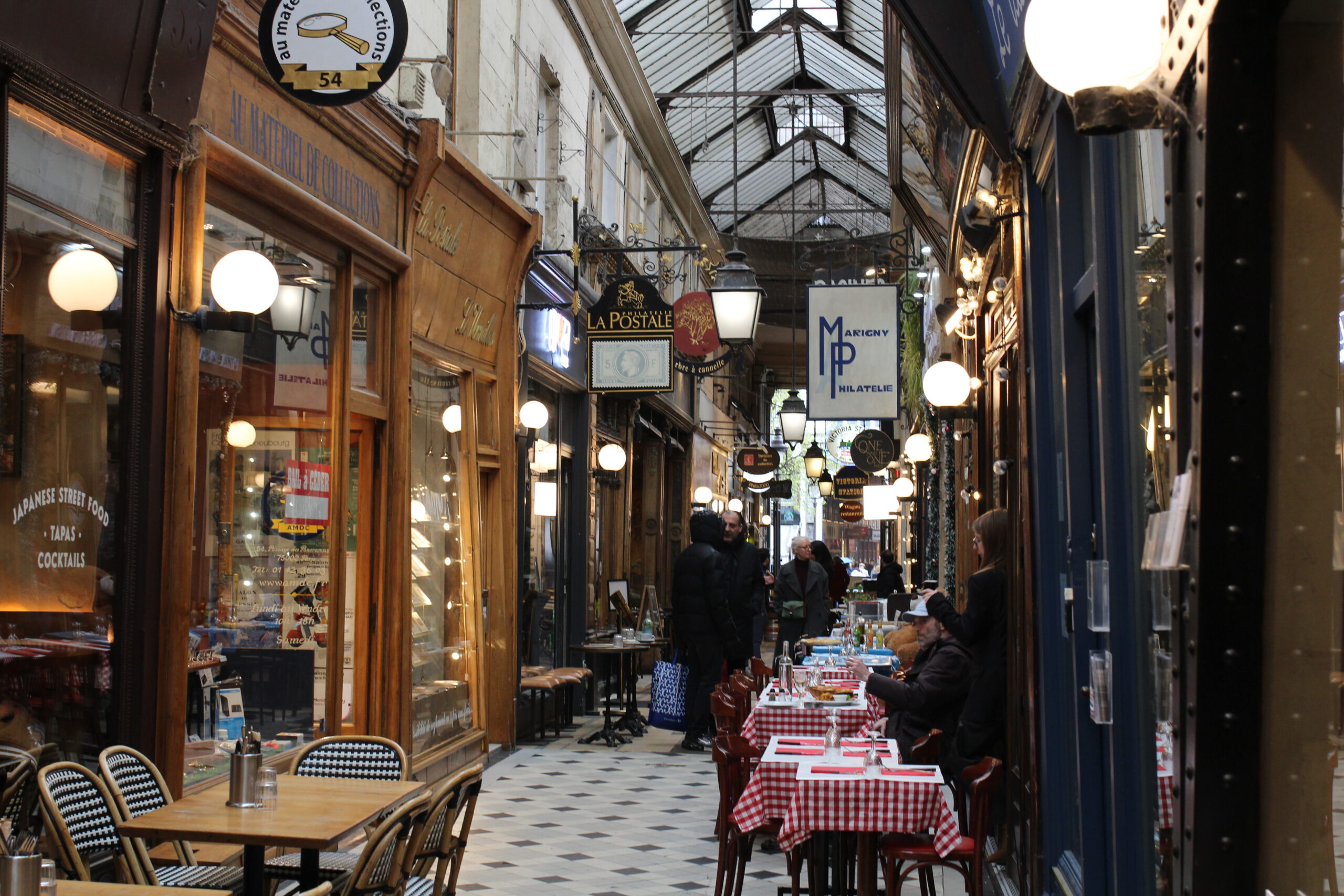
Paris still has about thirty covered passageways. There were 150 in the mid-19th century. These shopping arcades, built between the late 18th century and the Second Empire, are the first shopping centers in history, long before American malls. Today, they offer a unique setting for a Corporate team building in Paris Atypical, rich in history, accessible in the heart of Paris.
Public Anim offers you the opportunity to make it the playground for your next event.
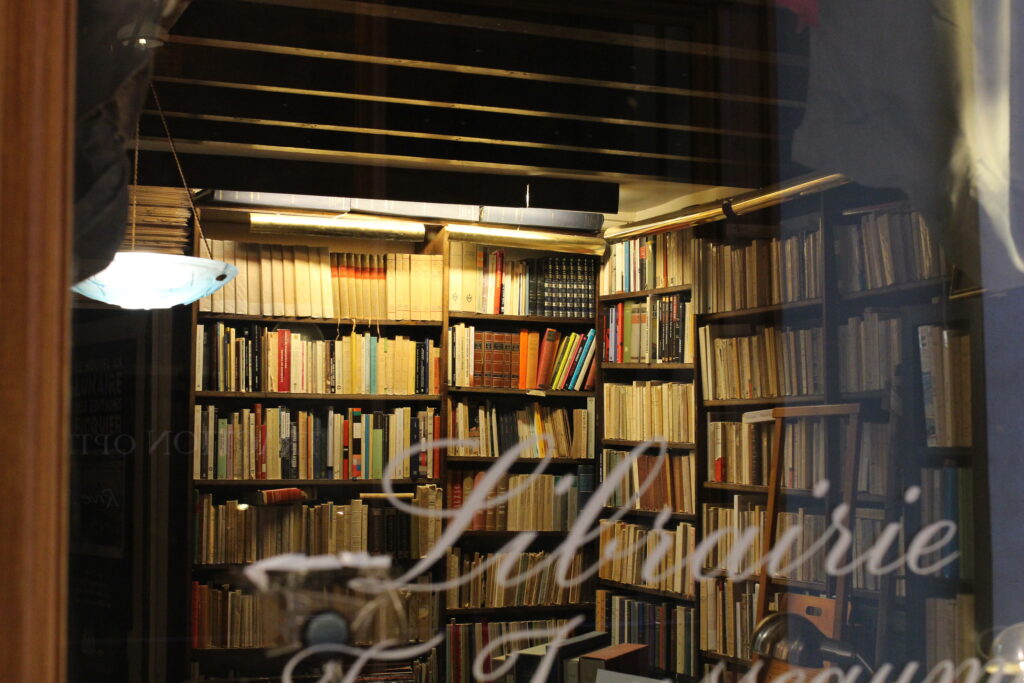
A covered passage is a pedestrian walkway opened between two streets, covered by a glass structure, and lined with shops along its entire length. They were designed at a time when Paris did not yet have sidewalks. These galleries offered strollers a refuge from muddy streets crowded with carriages.
Haussmannian renovations and competition from department stores led to the disappearance of most of them. Those that remain have largely been classified or listed as historical monuments. Today, they house restaurants, antique dealers, specialized bookstores, and artisan workshops.
Before organizing an event in this setting, here is the essential data:
Opened in 1799, it is the oldest arcade in Paris. In 1817, it became the first public place in the capital to be lit by gas. History is etched into the walls and shops: the engraver Stern with its listed Art Nouveau storefront, stamp dealers, and a seller of canes and umbrellas.
Several bistronomic restaurants have opened in the former shops, making collective dining easier.
Team building strengths: Its multiple inputs allow for easy management of large groups. Ideal for a historic rally.
Built in 1823, Galerie Vivienne is one of the most photographed in Paris. Its floor mosaics, bright glass roof, and architectural embellishments make it a visually striking setting. Architect François-Jacques Delannoy incorporated symbols of success: laurel wreaths, cornucopias, and Mercury's caduceus.
Team building strengths: The most photogenic setting for Parisian passageways. Perfect for a photo challenge or an urban escape game.
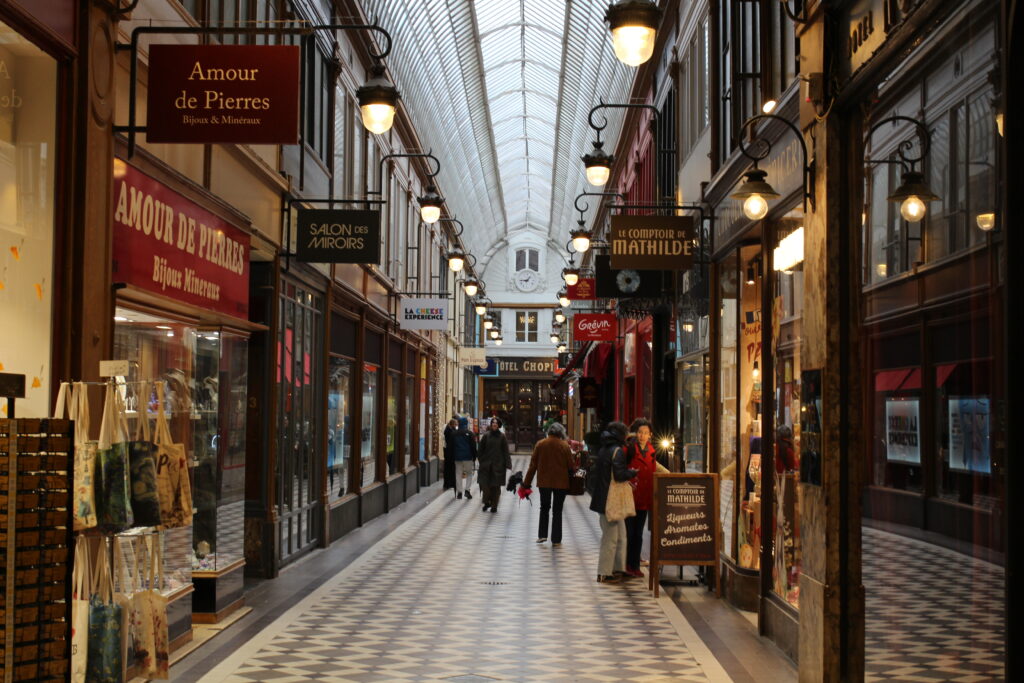
Built in 1845, its black and white checkerboard floor and large glass roof immediately set it apart. It opens directly onto the Grévin Museum.
Passage Jouffroy also houses the Hall of Mirrors, a reception and event space nestled in the heart of the passage. With its high ornate ceilings, mirrors, and soft lighting, it's a rare setting in Paris for a cocktail reception, dinner, or an extraordinary team-building event. For groups looking to extend the passage experience in a private venue, this is an option to consider.
Team building strengths: chainable with the Passage des Panoramas and the Passage Verdeau for a route through three consecutive arcades.
With its 11.80 meters in height, it has the tallest glass roof of all Parisian arcades. The light there is exceptional. Its arts and crafts shops make it a lively place, far from a museum atmosphere.
Team building strengths: The vertical space creates an immediate surprise effect on participants, useful for launching an animation.
In 1826, two pork butchers named Véro and Dodat self-funded the construction of this arcade between Rue du Bouloi and Rue Jean-Jacques Rousseau. It's one of the least touristy passages in Paris. Its intimate atmosphere, with its painted columns and checkered floor, is reminiscent of a movie set.
Team building strengths: ideal for small groups looking for an immersive and private experience.
Public Anim designs custom animations tailored to this type of setting.
Teams explore passages answering questions about their history. There are plenty of anecdotes: construction dates, patrons, architectural details, historic shops. Duration: 2 hours. Groups: up to 60 people divided into teams of 8.
Each team documents a passage and builds a visual narrative around 5 imposed architectural details. The productions are presented and voted on at the end of the session. Duration: 2.5 hours.
Teams solve puzzles based on the real history of the passages. The hybrid in-person and digital format allows for navigating through multiple galleries. Duration: 3 hours.
Visit Hall of Mirrors, Located in Passage Jouffroy, it's a prestigious room ideal for hosting a group in the heart of a covered passage. Its decor, mirrors, and timeless atmosphere serve as the setting for sessions of the format The Ultimate Blind Test, with Paris and French culture themes. Duration: 1 hour 30 minutes.
Skylights create significant reverberations. For presentations with amplified speech, audio systems adapted to the space are essential.
The best time for team building in the passageways is on weekdays, during the 9 AM to 12 PM slots. Tourist traffic is lower then, and the shops are open, which enriches the experience.
Accessibility varies from one passage to another. Some have steps at the entrance. Public Anim checks this point passage by passage before each event.
The Passage des Panoramas and the Galerie Vivienne have on-site restaurants that can accommodate groups. This is a real logistical advantage for concluding the session with a meal.
Setting up a team building event in the covered passages follows a simple and structured process:
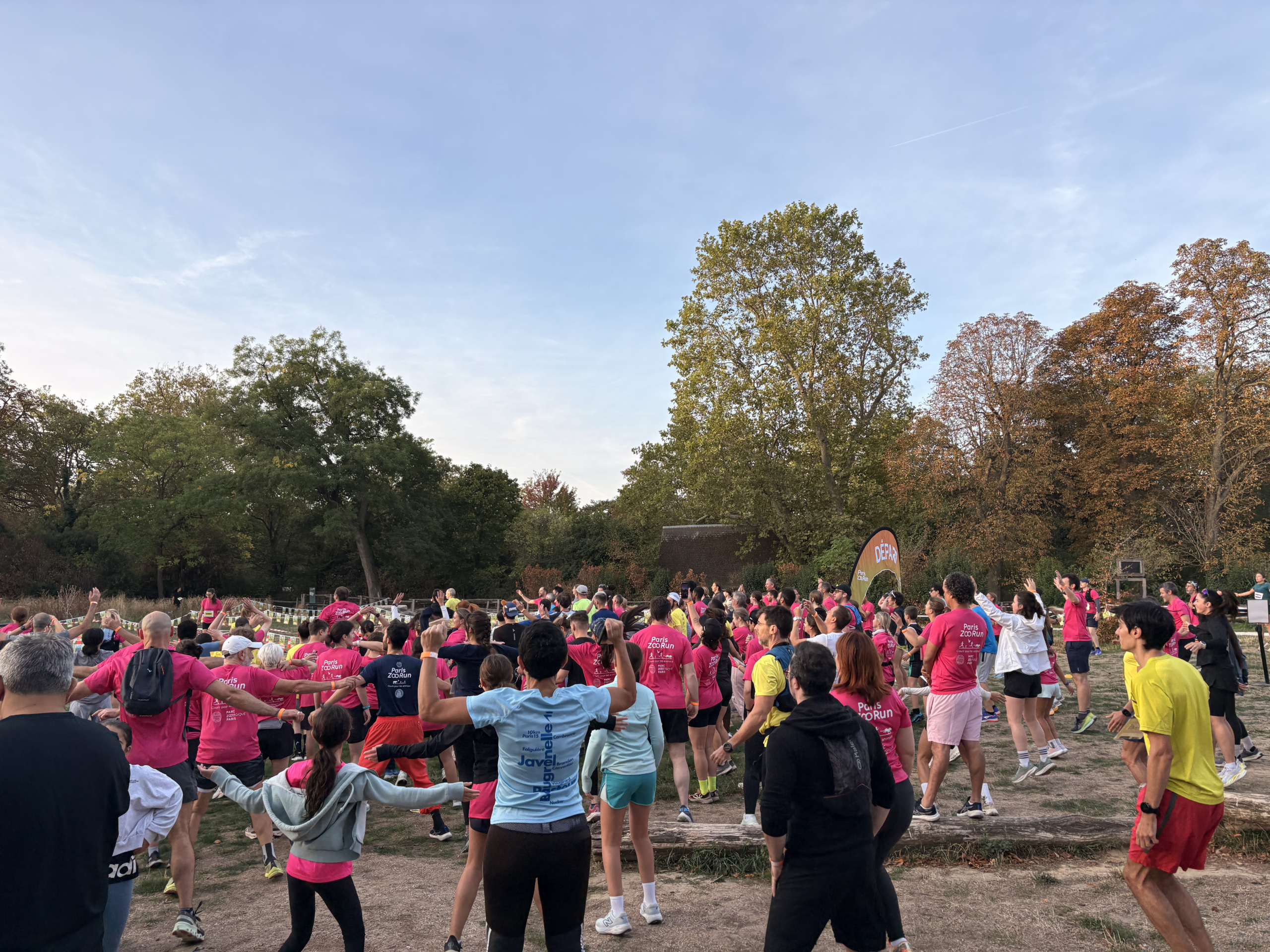
Public Anim regularly intervenes in the Île-de-France region at various sports and cultural events. We have notably provided micro-animation of the Trail du Josas in the Yvelines and The animation of an FFF tournament at Clairefontaine. This fieldwork experience, in very different contexts, strengthens our ability to adapt the animation to each environment.
The covered passages of Paris combine three rare advantages: an exceptional architectural setting, a unique geographical concentration in the 2nd arrondissement, and a historical weight that few places can rival. For corporate team building, it's an extraordinary playground without sacrificing accessibility or practicality.
You can combine your discovery of the covered passages with an arrival in the New Athens neighborhood in Paris to discover the romantic charm of the neighborhood. Further north in the capital, your teams can also gather at the Montmartre district, a neighborhood ideal for corporate team building outdoor activities.
The teams Public Anim designs custom animations suited to this type of environment, with a dedicated host from start to finish.
Are you organizing a corporate event in Paris? Contact Public Anim for a quote within 48 hours.
There are about thirty left. The majority are concentrated in the 2nd arrondissement, with 14 galleries within a 1 km² radius. They were almost all built between 1800 and 1850.
The Passage des Panoramas is the most practical for large groups. Its multiple entrances facilitate crowd management, and it has restaurants capable of accommodating groups.
A guided tour informs. Team building creates cohesion.
During a visit, the group listens and observes. In team building, participants are divided into teams and tackle concrete challenges (scavenger hunt, investigation, photo rally) that force them to collaborate, communicate, and make decisions together.
The heritage of covered passages serves as a playground, not merely a backdrop to contemplate.
The 9 AM-12 PM or 2 PM-6 PM weekdays offer the best compromise: fewer tourists, open shops, and optimal natural light under the glass roofs.